Living Mind was a B2B2C mental wellbeing platform built before the pandemic made workplace wellbeing a boardroom topic. The timing was right and the partnership was serious - we built the organisational analytics side together with an organisational psychology scientist. The product never reached market maturity, and what it taught me now shapes how I run product work.
I was the founder, product owner, and one of the builders.
What We Built
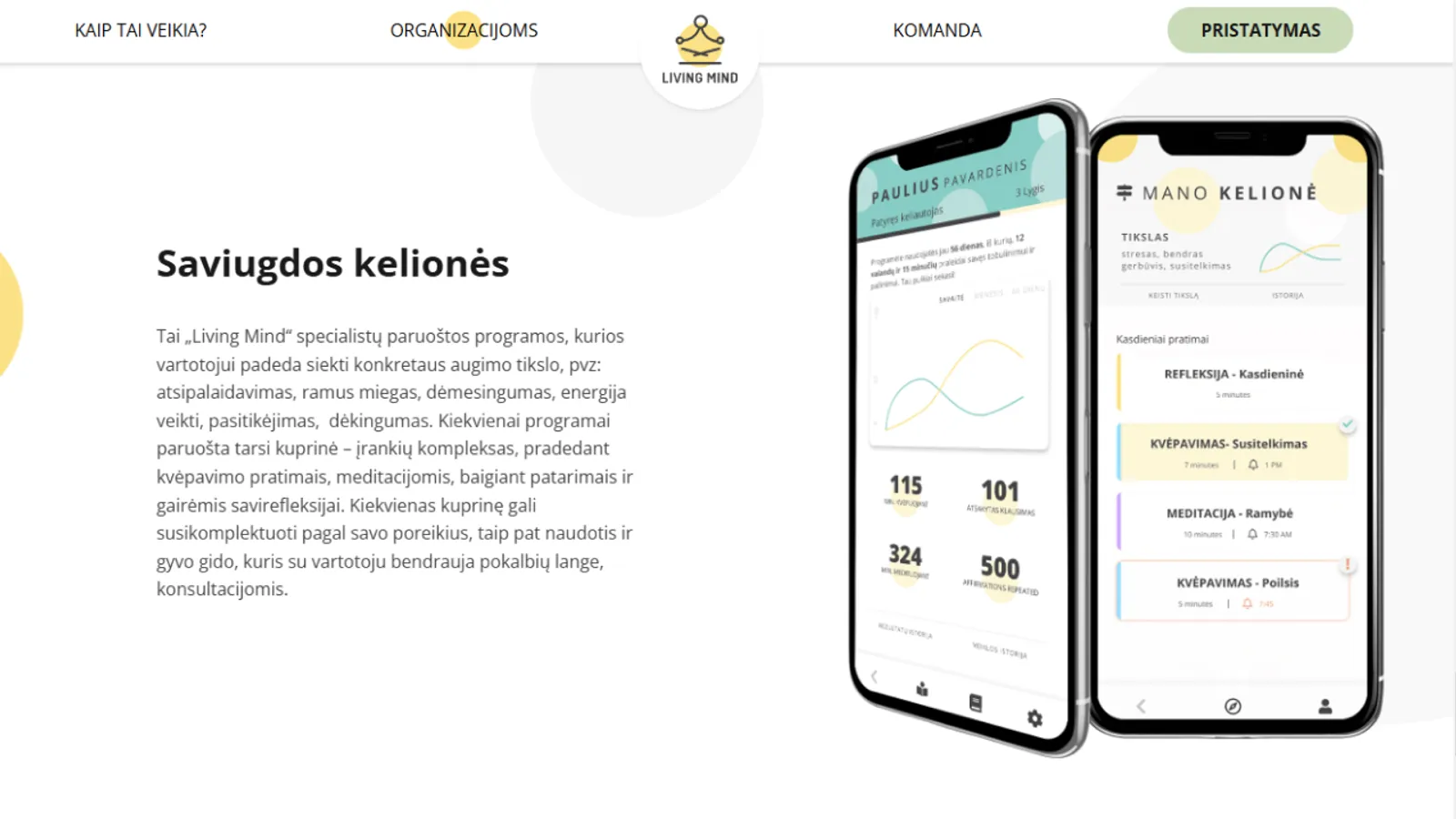
For individuals: an emotional journal, guided audio practices (meditation, breathing), and goal-based reflections - better focus, better sleep - wrapped in a chat interface designed to feel alive, with a path to connect with a real consultant or book actual sessions.
For companies: surveys, team micro-climate analytics, insights and recommendations. The pitch was simple - employees who feel better, sold to the businesses that employ them.
What Went Wrong
The MVP tried to contain the whole vision at once. We built everything - the individual tools, the chat, the organisational analytics - instead of the smallest version that could prove the idea. A product that big is hard to polish on a first-round budget, and when the first company pilots showed engagement needed rethinking, there was not enough runway left to rethink it. The project wound down.
No single dramatic failure - scope, sequencing, and timing lessons stacked on top of each other.
What It Taught Me
- Scope the MVP to one loop that proves one behaviour, not the full vision. Any budget buys a lot of validation if you spend it in small questions.
- Design the reason to come back before designing the feature list.
- Settle team and money matters in writing early, while everything is still easy.
- Use your own product like a user - it is the earliest research you will ever get.
Every discovery and advisory engagement I run starts from these lessons. They are cheaper secondhand.
Flutter Laravel WordPress